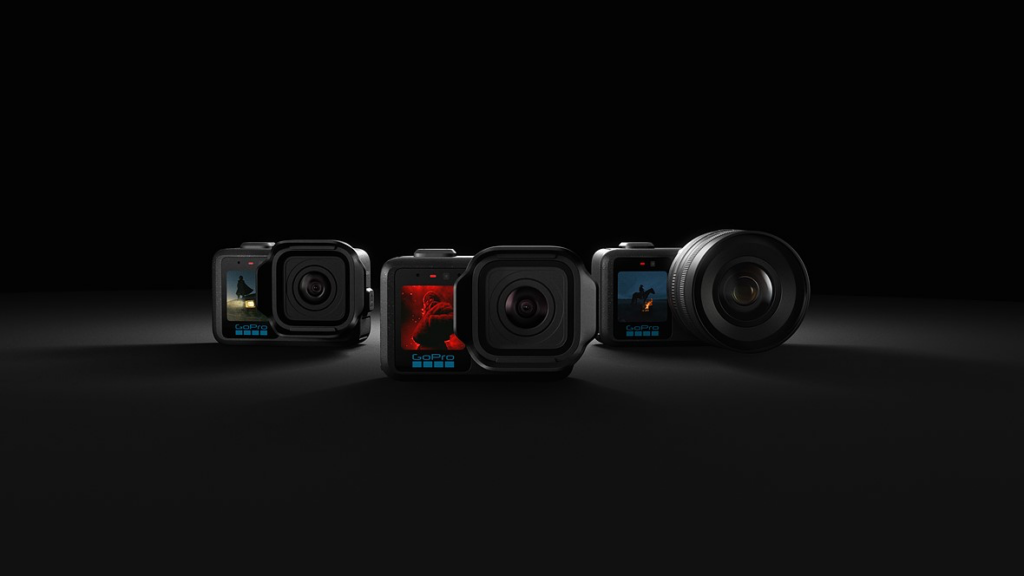
| The biggest name in action cams just announced an unexpected new style of camera GoPro’s new Mission 1 series includes… an interchangeable lens camera? |
| Image: GoPro |

GoPro has announced a new line of cameras, dubbed the Mission 1 series, which includes something entirely new for the action-cam company: an interchangeable lens camera with a Micro Four Thirds mount.
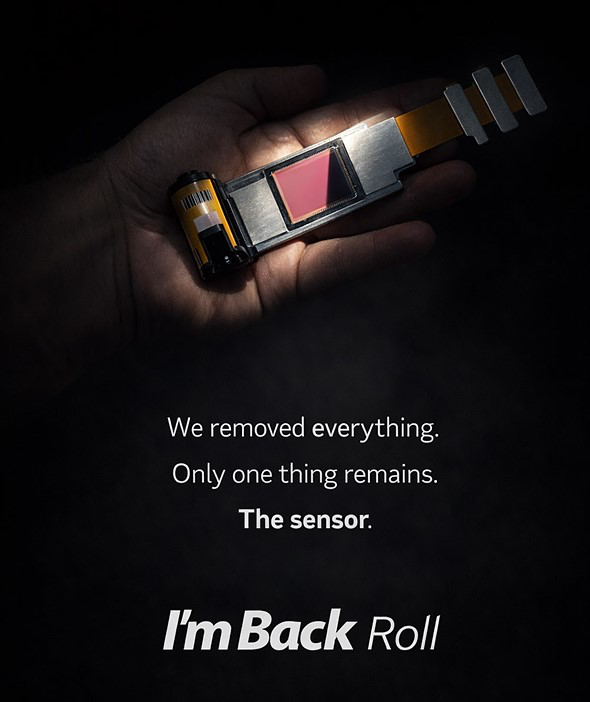
The digital film that’s always just around the corner, now promised in 2027

| Image: I’m Back |
[This story was originally published on March 12 2026, it has been updated with additional detail after the Kickstarter project launched]
RECENT VIDEOS
I’m Back, the crowd-funded startup that has spent years trying to deliver on the promise of a digital module for film cameras has taken a step closer to doing so, via a new Kickstarter project.
The Kickstarter is now open and has received over $450,000 worth of funding from nearly 1000 backers. The project says it is targeting the delivery of units to backers by December 2027.
The company says working prototypes exist but that the electronics are not finalized. Development of elements such as printed circuit board assembly, film shaped battery and steps including APS-C sensor integration will be funded from the money raised via Kickstarter.
Further details include that there will be modules with between 64 and 256GB of storage. A version designed for Leica M cameras, including a rear door is also offered. No details are given about battery life, other than that it’ll be limited. The bluetooth trigger that activates the digital sensor prior to using the camera’s shutter to take an exposure has not yet been developed and the mockup shown is noted as being AI-generated.
The company says it it working on an optional external pack that boosts battery life and adds mic input and HDMI out.
The long-held dream of digital modules for film cameras
The concept of a digital module the shape of a roll of 135 film has existed almost as long as digital photography, with DPReview’s founder Phil Askey following the story and failure of the Silicon Film project between 1999 to 2001.
Kickstarter-funded project I’m Back has been promising something similar in recent years, and has developed a series of interesting attempts.
Previous attempt: I’m Back Film
These have included a version that required you to remove the rear plate of your film camera and add a large box with a compact camera sensor that took photos of a translucent screen set into the film plane. And, more recently, an insert built around a Four Thirds sensor that slotted into the film bay, but required a large external box for batteries, storage and control.
| Like Silicon Film’s final attempt, the last-gen I’m Back Film connected to an external box that was home to batteries, processing and controls.Image: I’m Back |

Although this attempt came close to the solution that Silicon Film had settled on, before its collapse, we’ve seen some fairly critical reviews from people who’ve tried to use it.
And yet, true to the company name, I’m Back has returned, teasing another attempt at the elusive dream of simple film-to-digital conversion, a quarter of a century on.
Details of the I’m Back Roll are relatively sparse, beyond that it’ll be built around an APS-C sensor and won’t require any external parts. The implication appears to be that, like film, you won’t be able to change settings such as ISO, or preview your image until after you’ve finished shooting and opened the camera up.
The company subsequently confirmed that it will be using the familiar IMX571 sensor from Sony Semiconductor, a 26MP BSI CMOS sensor that appears in a number of popular cameras.
Follow the original Silicon Film story
The company’s talk of a “more human way of photographing” immediately makes us wonder why a vastly complex mechanical or electro-mechanical film camera, designed around pretty sophisticated chemistry, should be considered more “human” than a digital device, but it’ll be interesting to see what they come up with, this time.
As always, our decision to report on a Kickstarter project should not be seen as an endorsement of the project. I’m Back has a history of successfully completing its projects, but opting to support a project does not guarantee that it will result in a delivered product.
This story was originally published on March 12 2026, it has been updated with additional detail after the Kickstarter project launched
Blackmagic’s new photo tools might be the end of your Adobe subscription

Published Apr 13, 2026
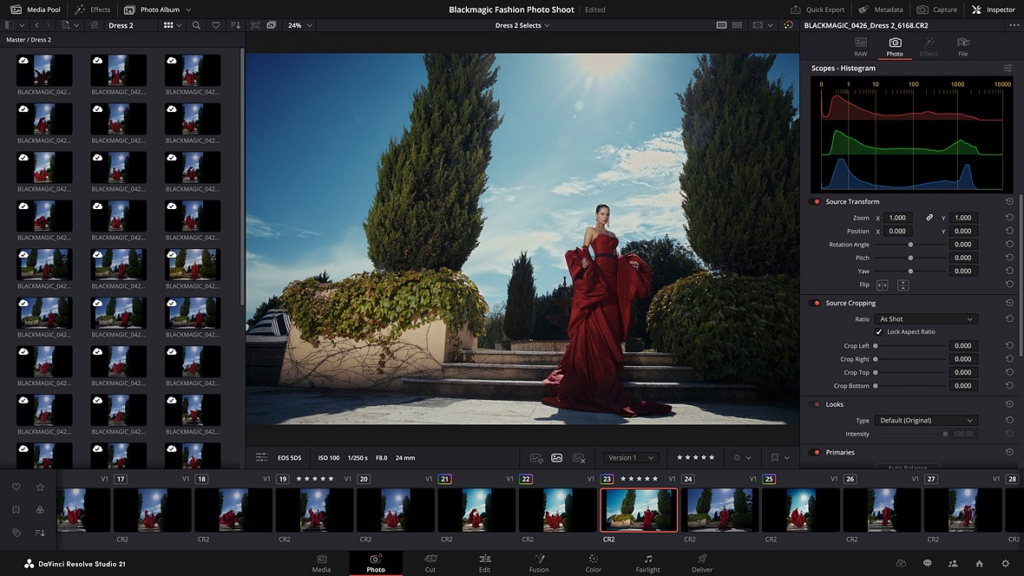

Adobe Lightroom is getting a new competitor from a surprising place. BlackMagic has added what looks to be a shockingly complete set of photo editing tools to the latest version of its Davinci Resolve software, which has traditionally been designed primarily for video editing, color work, and sound design.
Resolve 21 gains a new “Photo” mode, which lets you organize a collection of stills into albums, apply ratings and labels and even search through all your images with an AI-powered tool that you can use to find photos of certain kinds of subjects. The company says it “worked closely” with camera manufacturers to support Raw stills from Canon, Sony, Nikon, Fujifilm and Apple, but you can also use it to edit JPEGs and HEIC files. There’s even a tethering mode for certain Sony and Canon cameras.
| Node-based editing will take some getting used to, but can be a powerful tool, depending on how you edit. |

The company’s main pitch for Resolve as a photo editor centers around its color tools. They’re extremely robust, as they’re designed for editing movies, but offer a lot of flexibility for stills too. The editor uses what’s known as a node-based approach, which lets you add adjustments as independent effects that can either chain together or not affect each other. For example, if you select part of your image using Resolve’s “Magic Mask” feature, you can have your base color adjustments apply to the entire image, but have certain edits only applied to the masked area.
While nodes can take a little bit of practice to wrap your head around, they can be a powerful and flexible way to edit. Using them isn’t absolutely required, though; the software also has built-in “Film Looks” presets that you can customize, and supports applying Look Up Tables, or LUTs, to your photos. And if you just want to edit basics like lightness, color temperature, saturation, etc., you can use more traditional sliders. Resolve also includes basic crop and rotation tools, too.

BlackMagic also says that edits and adjustments can be accelerated by your computer’s GPU, which it claims allows Resolve to process photos “dramatically faster than conventional photo applications.”
During a livestream announcing the update, BlackMagic’s CEO said that the Photos mode will probably receive a lot of tweaks and improvements over time. But if it provides anything like the capabilities that BlackMagic has promised, it could be a viable competitor to more established programs like Adobe Lightroom and Capture One Studio right off the bat.
That’s especially true given the price. Davinici Resolve is available for free, though to get all of its features, you’ll have to pay $300 for the “Studio” version*. However, Blackmagic tells us that, currently, there’s no differences between the free and Studio versions when it comes to the photos page, though some features of the color editor, and many of the program’s AI tools, require a paid license.
Davinici Resolve 21 is being released in beta today, though it’s worth taking that label seriously. We weren’t able to successfully export a photo while testing to see if there were any obvious limitations, with the software just giving us an error message about not being able to decode it, so it seems like there’s still definitely some work to be done.
The company also announced plenty of features for video editors, too, which largely center around AI. The software now has a suite of built-in AI-powered effects, such as voice generation, “CineFocus,” which lets you add customizable blur to your video, actor aging/deaging tools, blemish removal and more. Many of those, and the software’s other video-focused tools, such as AI-upscaling and noise reduction, can also be used when editing stills.
* – Currently, that’s a one-time fee, with Studio owners getting free upgrades to each subsequent version. However, during the livestream, BlackMagic’s CEO mentioned that the company may need to start charging for upgrades someday.
Leave a Reply