Point Reyes Photographer Spotlight: Clair Sapilewski
September 21, 2026__|__Point Reyes National Seashore Association
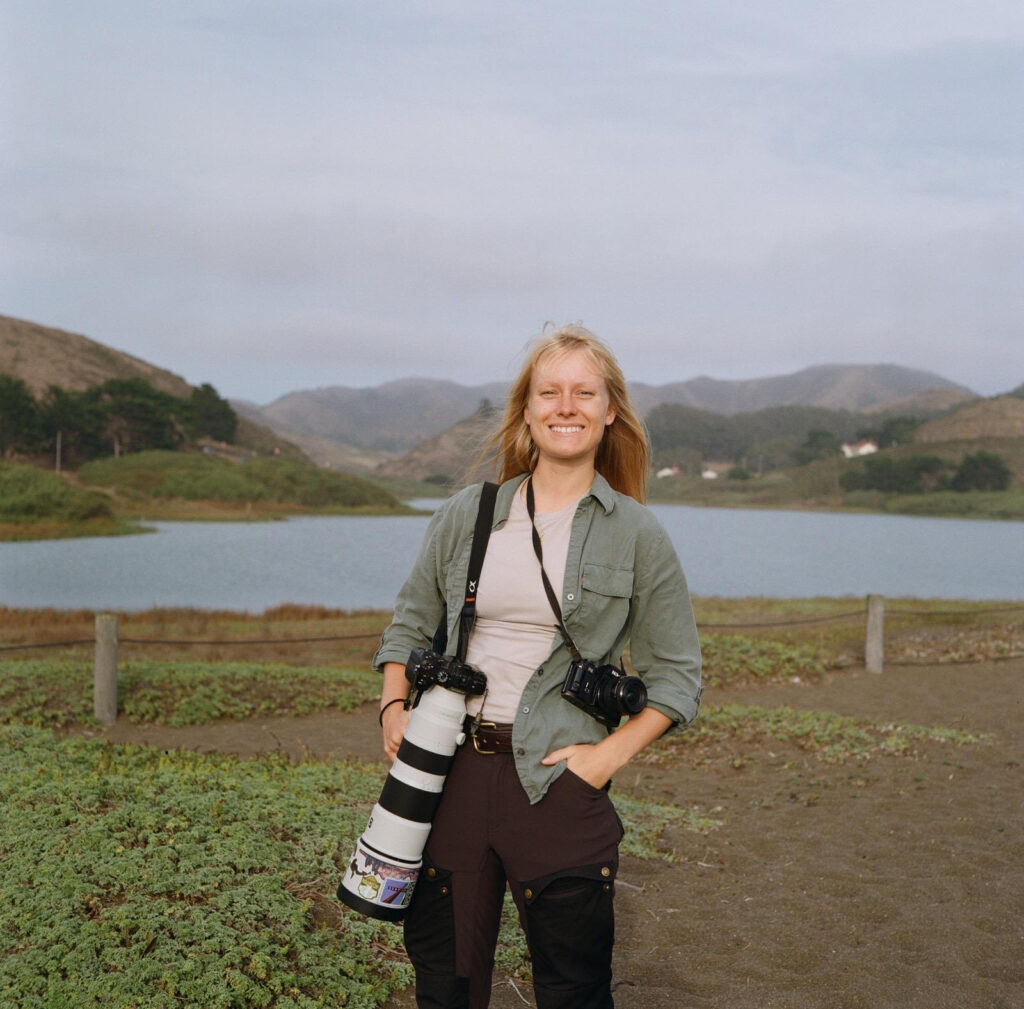
Clair Sapilewski is a science communicator currently working as a National Park Service Scientists in Parks interpretive assistant based in Golden Gate National Recreation Area and Point Reyes National Seashore. She uses her photography, videography, social media and writing skills to teach the public about the important monitoring work done by scientists in the parks.
This past May, Clair graduated from American University in Washington, D.C. with a double major in Photography and Journalism as well as a minor in Environmental Science.
She is interested in multimedia science journalism and loves communicating about the natural world. She has previously worked for PBS, the National Park Service, the newspaper The Eagle and the magazine AWOL. Additionally, she has been a cinematographer on several short films.
Clair is from Redwood City, California. She enjoys hiking, reading (especially epic fantasy) and listening to classical and folk music. Clair has also sailed over 10,000 nautical miles.
Check out more of Clair’s work on her website and on Instagram: @clair.a.s
← Photo by Cam Huynh.
Q: As an interpretive assistant with the National Park Service, what do your days or weeks typically look like?
My days have been split between going into the field with scientists to collect media and staying in the office where I compile that media into stories, posts and video projects. When I am in the field, I shadow different crews of scientists who study various aspects of the park’s ecosystem. I bring along a camera, or two cameras if I will be photographing wildlife with a telephoto lens. If I am working on a video project, I’ll also pack a tripod and a microphone.
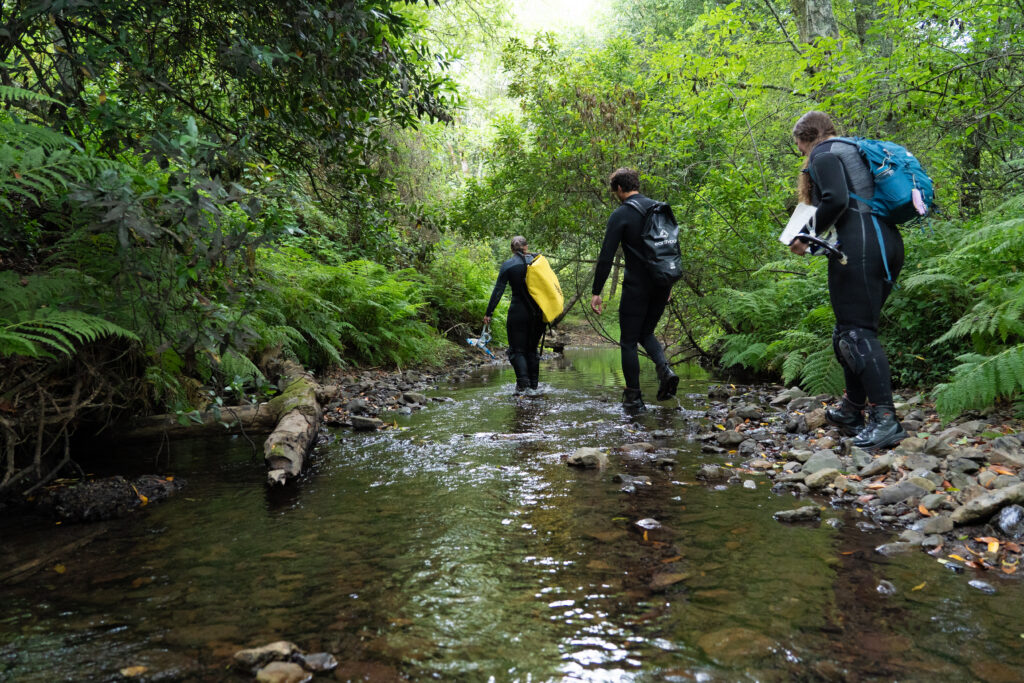
Left: The fisheries team conducts snorkel surveys to monitor endangered juvenile coho salmon and threatened steelhead trout in Pine Gulch Creek. Right: Young coho salmon and steelhead trout found on a seining field day.
Q: Can you share about the range of fieldwork that you’ve documented at Point Reyes, and what stood out to you from these experiences?
At Point Reyes National Seashore, I’ve had the privilege to join quite a few different teams in the field. I’ve joined NPS Marine Ecologist Sarah Codde to monitor harbor seals, hiked with PRNSA Biological Science Technician Aiko Goldston to find northern spotted owls, and photographed the fish crew as they snorkel, searching for coho salmon and steelhead trout. The majority of my field days in Point Reyes, however, have been spent on the beaches with the western snowy plovers. Whether with Aiko Goldston, PRNSA Biological Science Technicians Parker Kaye, or by myself, I have loved my time with these charismatic shorebirds.
Q: What do you love about documenting and communicating the science happening at Point Reyes?
Point Reyes is a special place, as I think anyone who has visited will tell you. The diverse habitats within the park, from the seaside lagoons to the foggy Douglas fir forests, make Point Reyes feel a bit like the sort of fantastical land you read about in storybooks. Photographing the park’s animal residents, from a respectful distance and alongside the teams that study them, means unlocking a new level of understanding of the ecosystems in Point Reyes. It is special to play a role in bringing these additional layers of the park to the public.
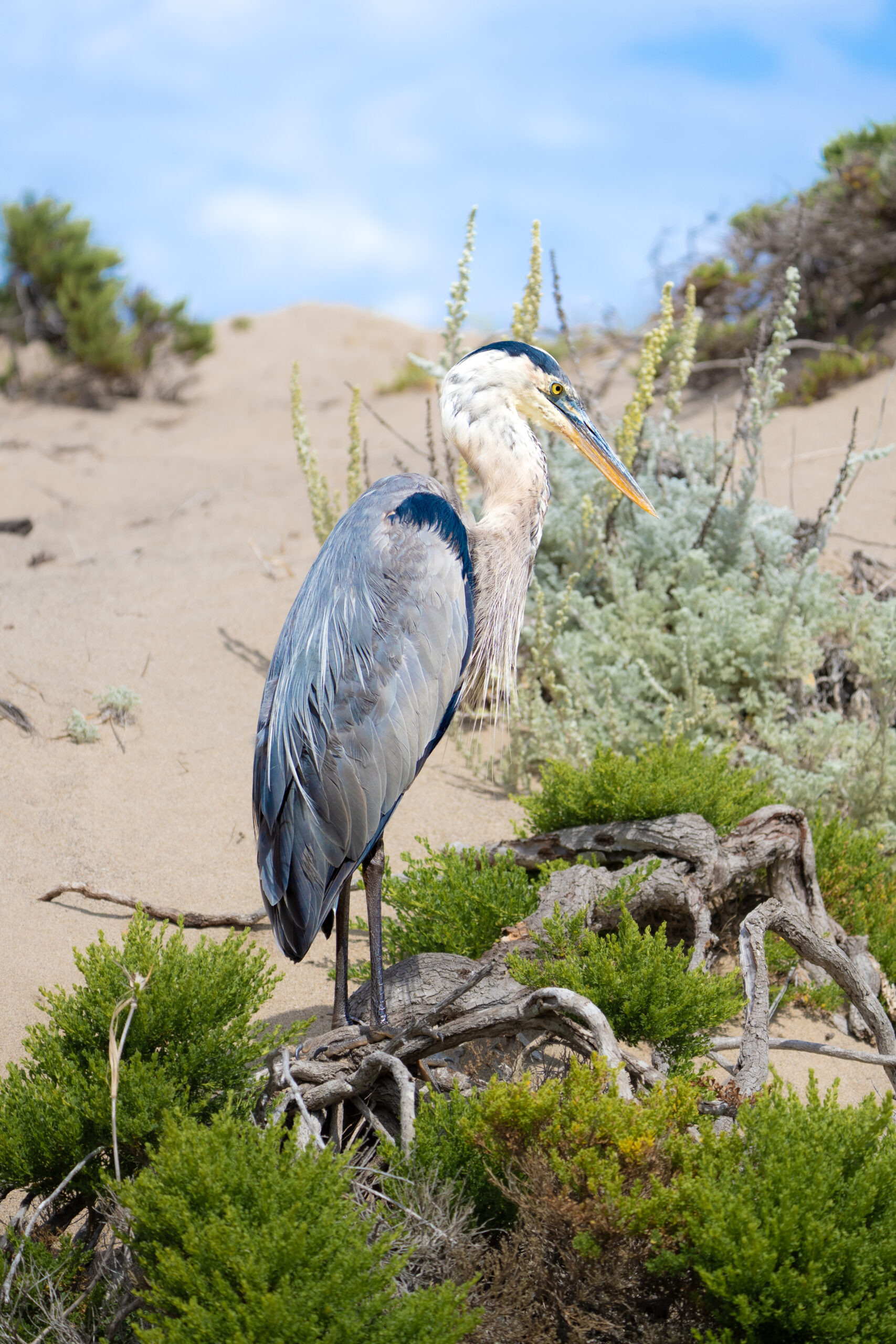
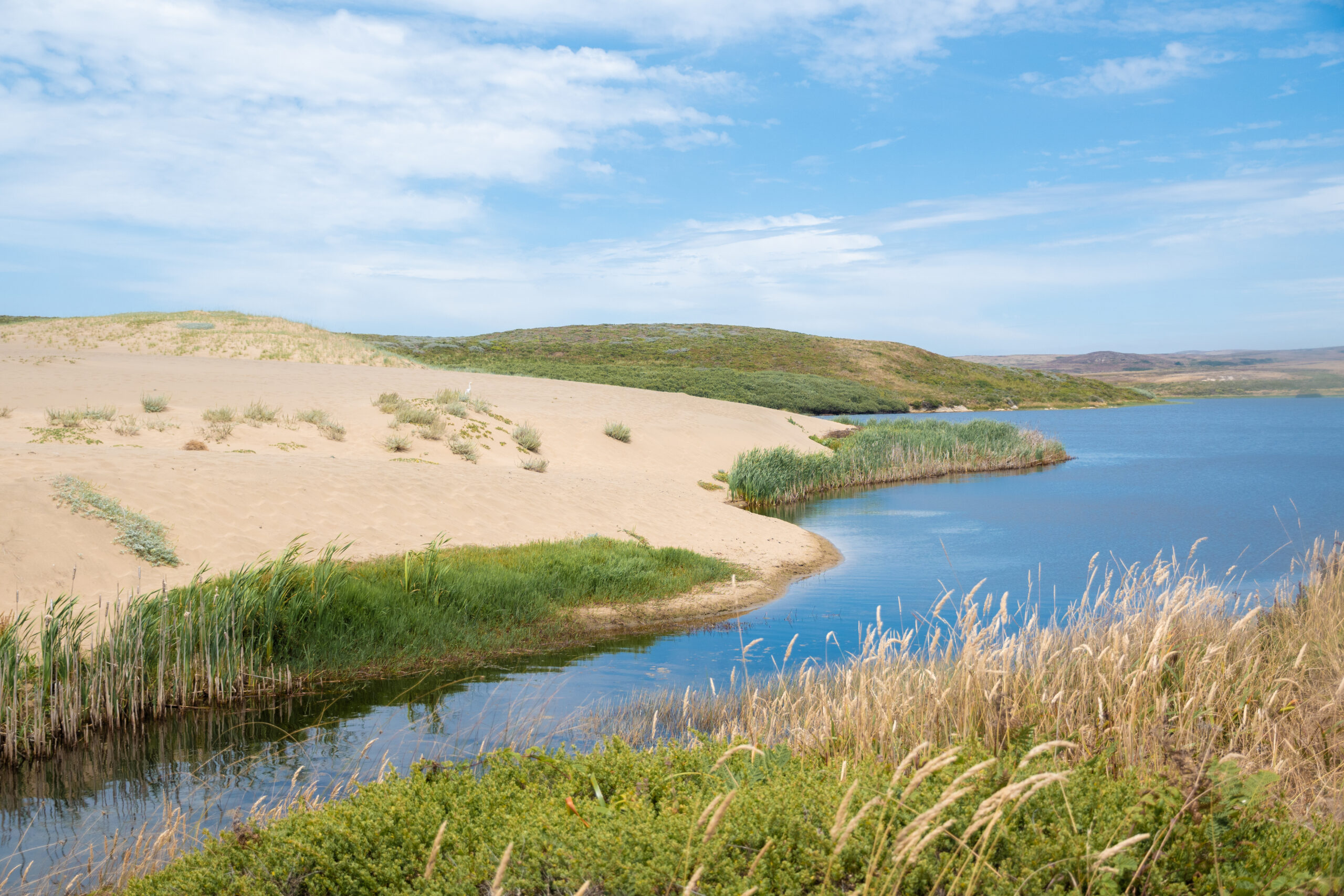
Left: A great blue heron at Abbotts Lagoon. Right: Abbots Lagoon. Clair loves photographing the park’s diverse habitats, from the seaside lagoons to the foggy Douglas fir forests.
Q: What’s a favorite moment—it can be big or small—that you’ve experienced in the park?
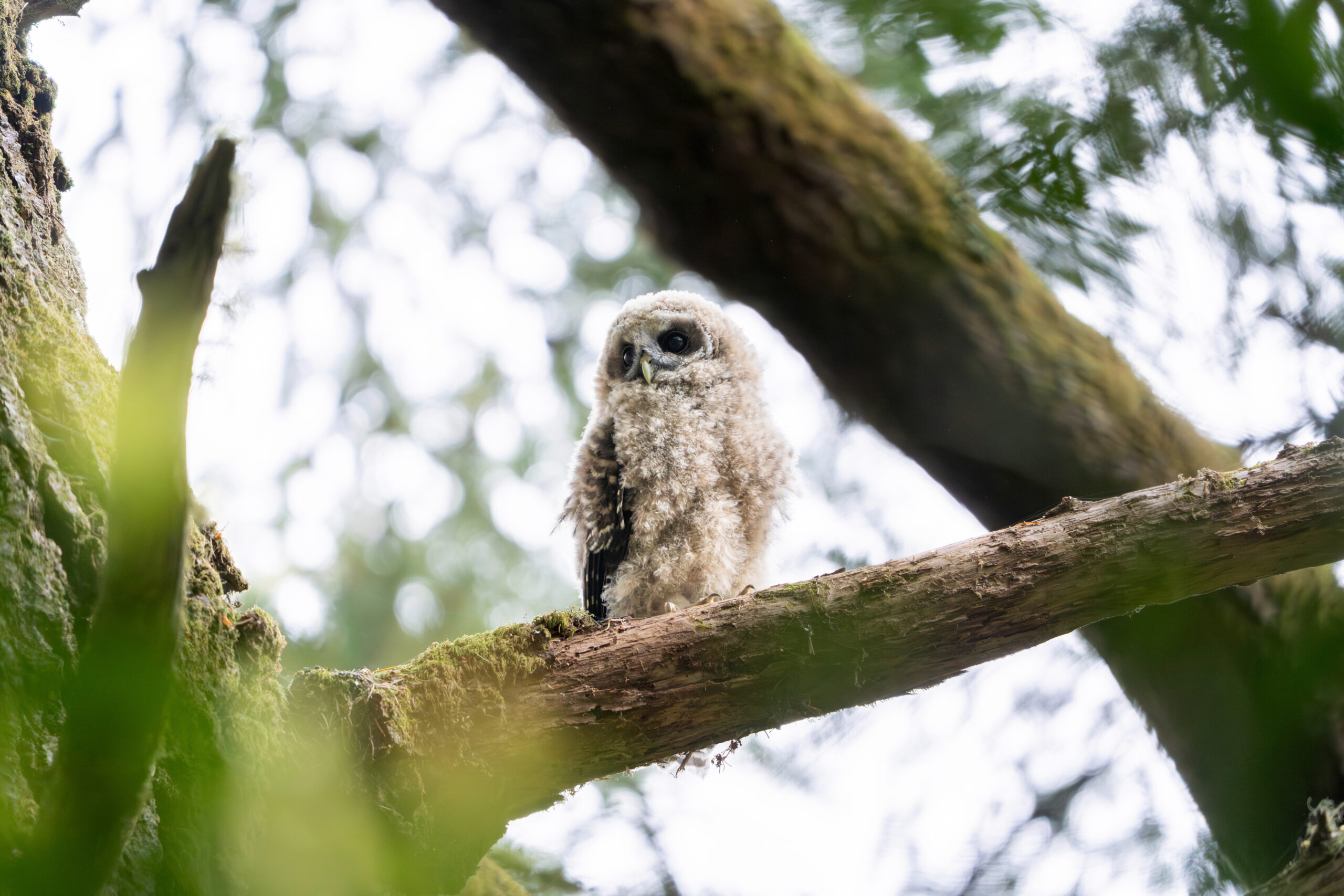
During one of my first weeks of working in the park, I went out on a field trip, guided by Aiko Goldston, with the hope of photographing northern spotted owls. After trekking through a lush, fern-carpeted forest, we arrived in a clearing, where Aiko pointed out a pair of owl fledglings perched above. I had recently learned just how threatened spotted owls are, so this encounter with them felt especially precious. They stuck around for a while, seemingly just as curious about us as we were about them. We got to photograph and video their family of four and even watched one of the fledglings practice flying!
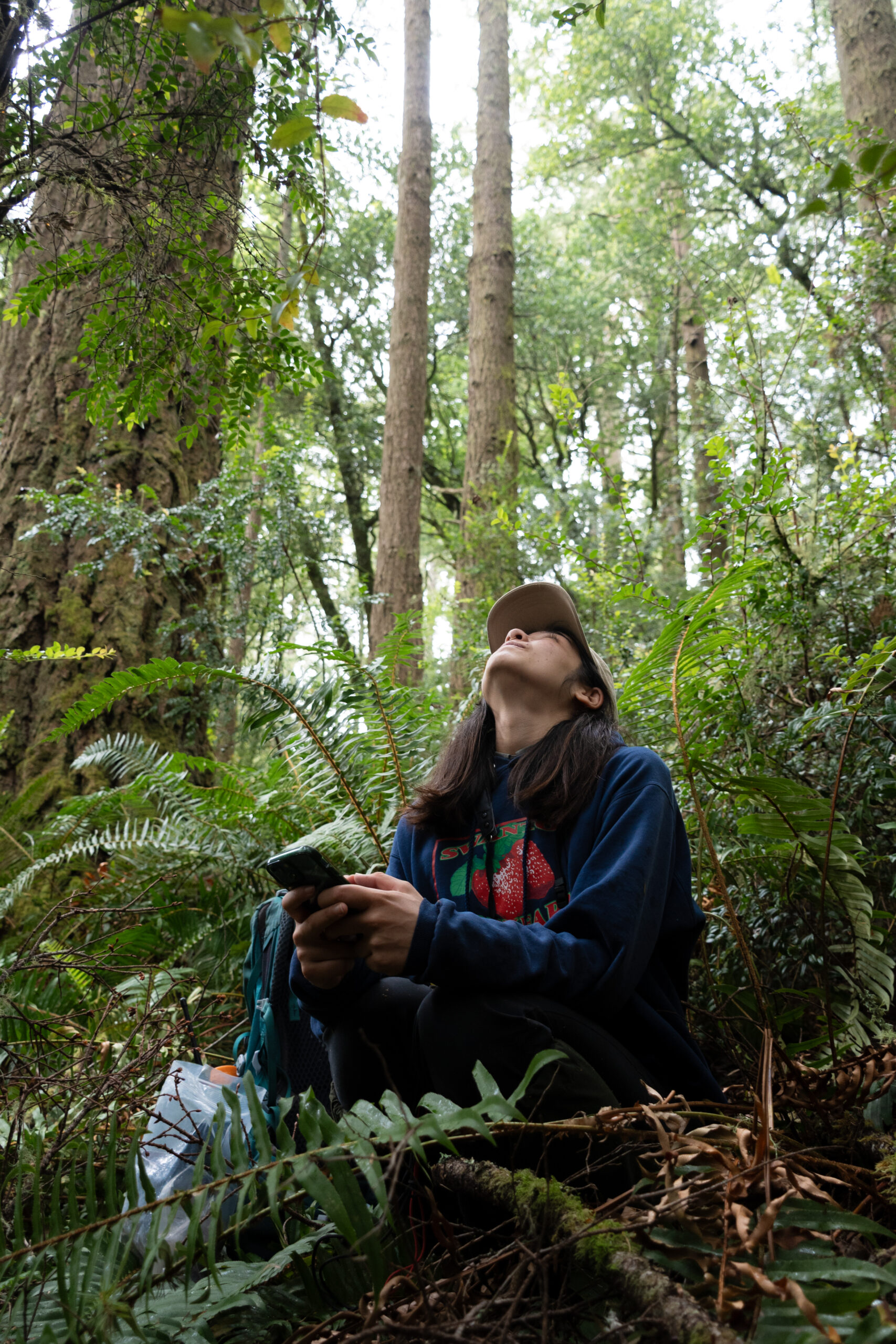
Left: PRNSA Biological Science Technician Aiko Goldston surveys for owls. Right: A young northern spotted owl. Clair took photographs and video of a family of four, and even watched one of the fledglings practice flying.
Q: Can you share about a specific communications project that you’re excited to be working on right now?
I am currently working on a mini-documentary about the western snowy plovers. I know how important it is that these birds are protected from human activities on beaches, and how getting the word out about them can play an important role in their recovery. Because of that fact, the video feels especially important. Plus, it’s a lot of fun to film them on the park’s beautiful beaches.
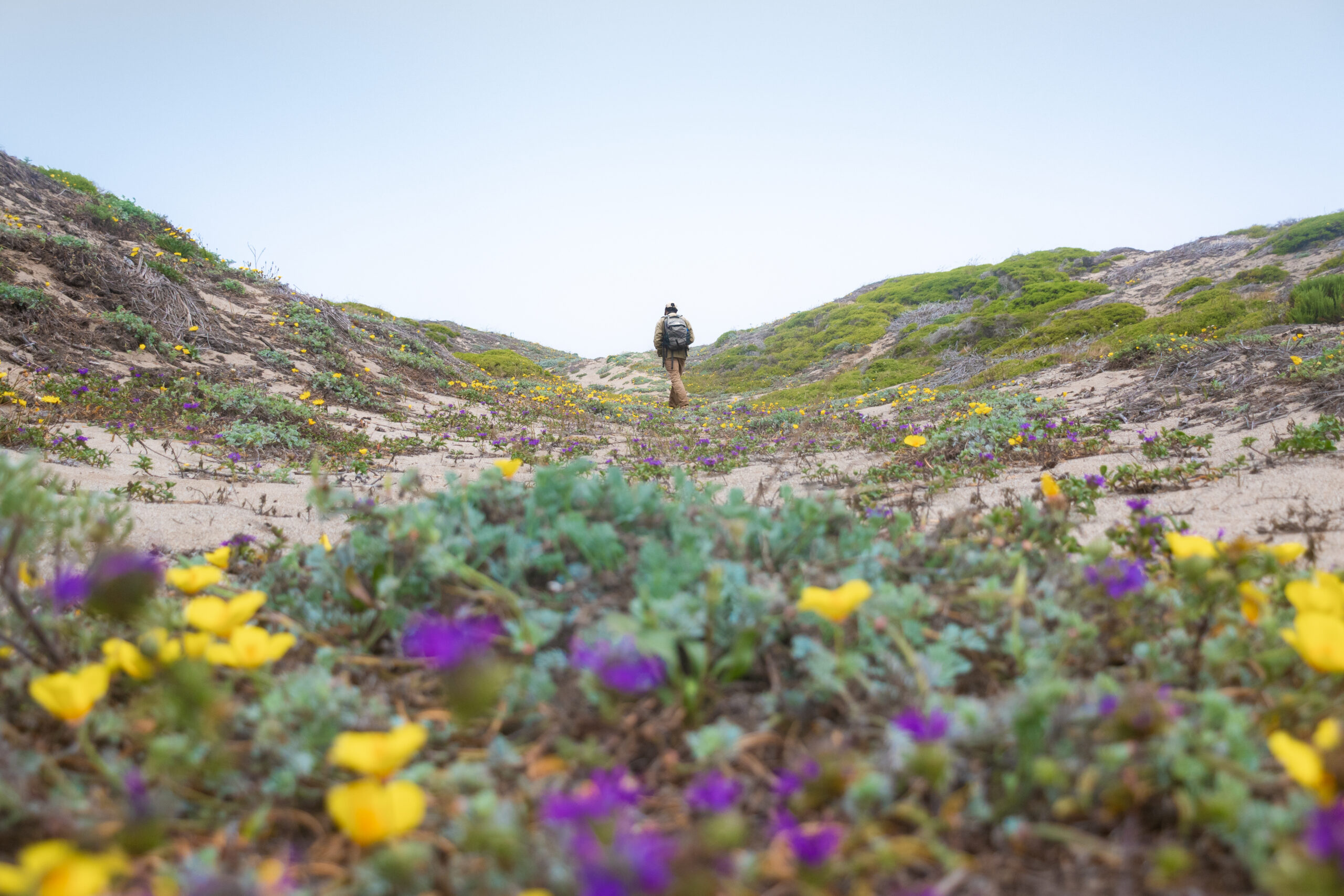
Left: PRNSA biological science technician surveying for plover nests during the 2026 breeding season. Right: A western snowy plover adult and chick. Clair is currently working on a mini-documentary about this charismatic species.
Q: Has photography / videography changed or enhanced your relationship with nature? How so?
Photography and videography have certainly made me notice more of my surroundings when I am in nature, from the greens that only come alive on a foggy forest day to the bright turquoise that appears just as a wave curls. Photography and videography have frequently prompted me to explore nature at times like sunrise or dusk, when fewer people and more animals are out and about. Sometimes, though rarely, I leave my camera behind. With it, I occasionally find myself more focused on capturing the landscape than experiencing it. When in nature without my camera, my photographer’s brain still allows me to notice the minute details of a scene. In those moments I feel that I can truly appreciate nature with all my senses in a way I might not have been able to if I had never picked up a camera.
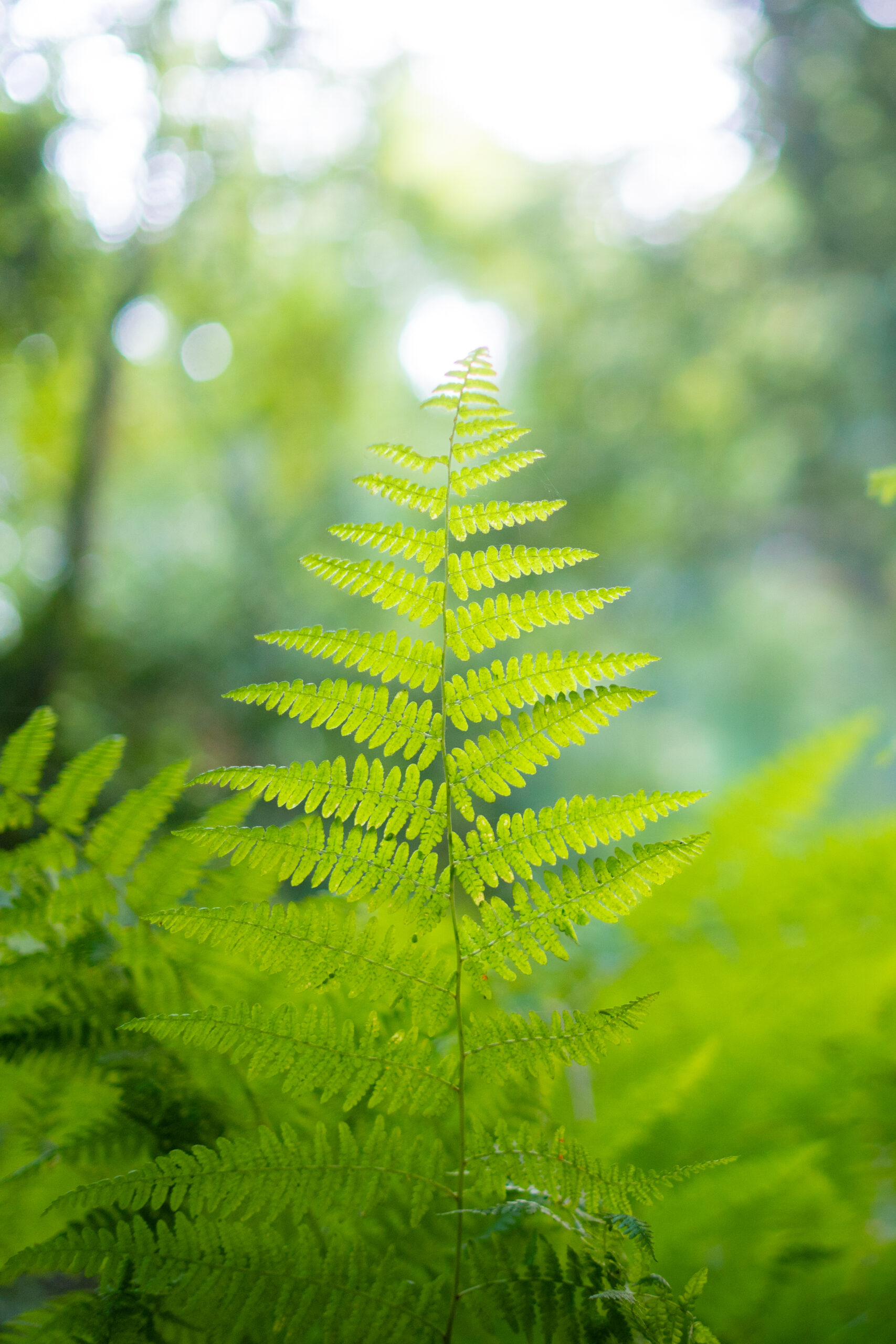
Clair is documenting the Seashore’s incredible vegetative communities, including this coastal lady fern (left) and leopard lily (right).
Q: Is there a specific moment that has affirmed to you why science communication work is important?
Interactions that I have witnessed with beach-goers learning about western snowy plovers have especially affirmed the importance of communicating about species in the park. Watching someone go from not knowing or caring about the birds to appreciating the beach as a living ecosystem is pretty cool. Especially because the public plays such an important role in protecting these birds, I can see how educating them about this species really makes a difference in their conservation.
Leave a Reply